Greening Earth 1 Project
Mseko Village, Iramba District
Launched December 2021
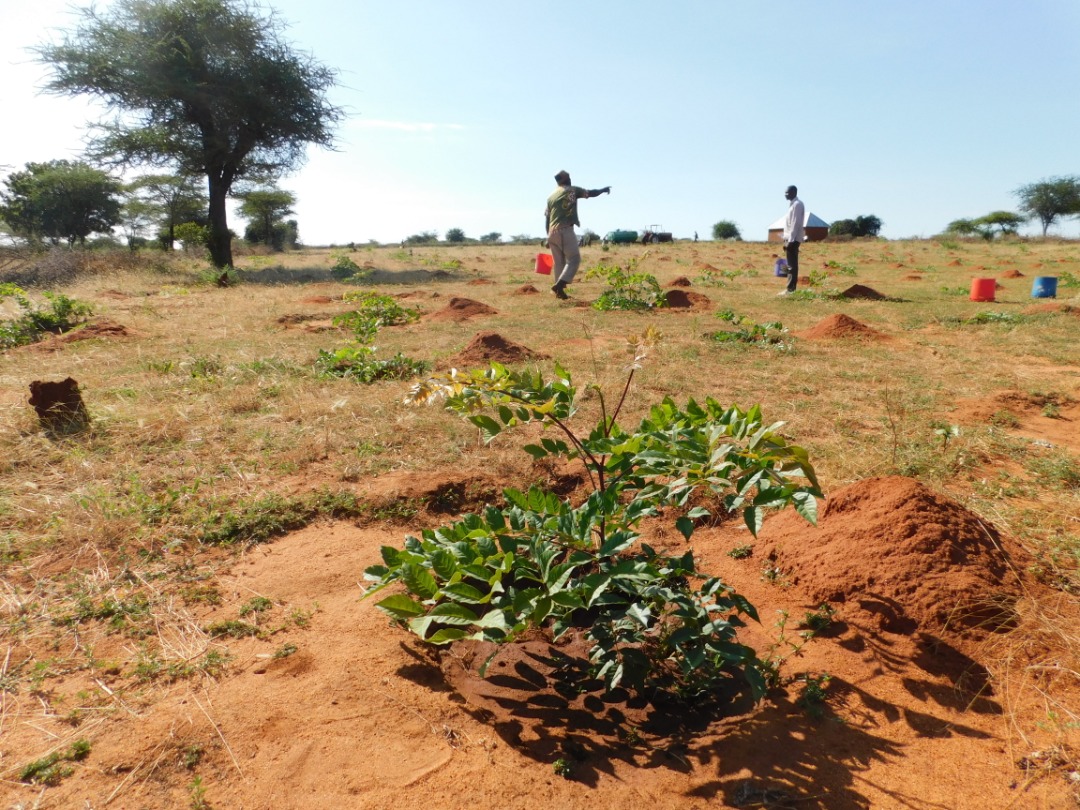
Greening Earth 1 Project
Mseko village is located in the semi-arid area that is affected by devastating climate change and severe food insecurity. Greening Earth Foundation observed the situation in Mseko village with consternation. In December 2021 it established a project to create awareness among community members on ecological restoration and sustainable use of natural resources for the future generation. Mseko lies at the bottom of the rift valley west of the Singida region, alongside the Dar es Salaam to Mwanza highway, where agriculture and animal husbandry are the main economic activities.
The project concentrated on five strategic areas: ecological restoration and sustainable use of natural resources, improving living conditions and health, strengthening social cohesion, improving family income, and improving education. The main aim of the project was to combat increasing poverty, especially in rural poor communities, by fighting the main sources of poverty in the community. The methodology uses motivational tools of peer learning and competition, delivered within a deliberately short project period of three years, so that communities adopt and sustain the practices themselves.
GE1 completed its three-year implementation cycle (2021–2024), and an independent end-of-project evaluation confirmed that the project effectively achieved its objectives. Improving living conditions and health was achieved by 91%, ecological restoration by 87.8%, family income by 75.5%, strengthening of local organizations and social cohesion by 69.8%, and education by 54.5%, an average achievement of 75.7% across all objectives. The project reached 974 households against an original target of 645, and supported households to secure legal ownership of their land: 1,036 Certificates of Customary Right of Occupancy (CCROs) were obtained, covering more than 2,287 acres of legally registered land.
The evaluation also highlighted lasting changes in the village: availability of fruits and tree seedlings, ecological diversification after heavy deforestation, introduction of dairy cattle farming, reduced conflicts over land use and ownership, and a reduced migration rate. Farmers reported improved farming capacity, market opportunities, and stronger community networks. To sustain these gains after phase-out, the project established farmer-managed structures, including the MWAKAZI cooperative and the MSEMWAMA producer association, which continue to link farmers to markets and services. The evaluators concluded that the GE1 model is relevant, effective, and ready to be scaled up to other communities.
The village council projected 645 households based on the census, but by the end of the project 974 households had actively enrolled, a 95.7% participation rate that far exceeded the original target. An independent final evaluation found the project's objectives were achieved by 75.7% on average, with improved living conditions and health reaching 91% achievement.